














By: Fern Sidman – Jewish Voice News
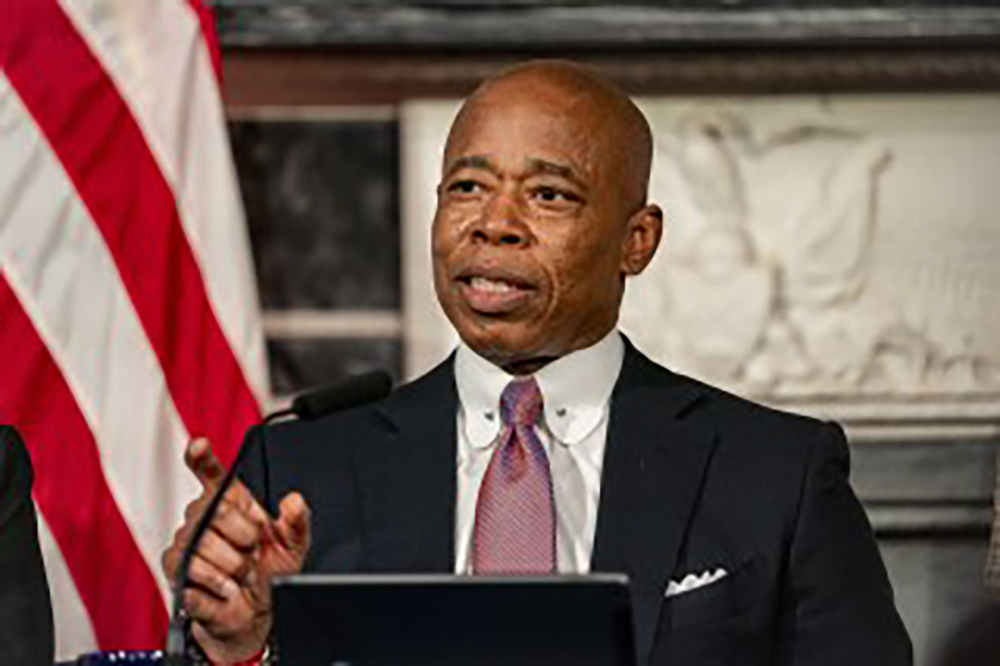
In one of the final and most consequential acts of his administration, New York City Mayor Eric Adams issued a sweeping executive order on Wednesday designed to insulate the city’s financial and procurement systems from the politics of the Boycott, Divestment and Sanctions movement, declaring that New York must not lend legitimacy—financial or symbolic—to efforts that discriminate against Israel. The move, which The New York Post described in a report on Wednesday as an unmistakable rebuke to Mayor-elect Zohran Mamdani, who has openly supported BDS on ideological grounds, has set the stage for an early confrontation between the outgoing and incoming administrations over the moral, economic, and diplomatic stakes of Israel’s place in the civic life of the world’s most Jewish city outside the Jewish state.
Adams unveiled the policy during the North American Mayors Summit Against Antisemitism in New Orleans, framing it as part of a broader commitment to protecting Jewish New Yorkers at a moment of rising hostility. “This administration recognizes the benefit of maintaining a strong relationship between the city of New York and the state of Israel,” he said, according to the report in The New York Post, adding that public contracts, pension investments, and municipal financial practices “must not be weaponized to advance discriminatory policies based on national origin or political ideology.”
The primary measure, Executive Order 60, prohibits city agencies, departments, and pension trustees from making investment or procurement decisions that specifically target Israel or entities connected to Israel. The language echoes a 2016 New York State executive order issued by then-Governor Andrew Cuomo—which has continued under Governor Kathy Hochul—blocking state agencies from doing business with companies that support BDS. In aligning the city with statewide precedent, Adams framed the order as not only lawful but imperative: a civic defense against what he and many Jewish leaders regard as an intensifying, coordinated campaign to delegitimize Israel and normalize antisemitism under the guise of political activism.
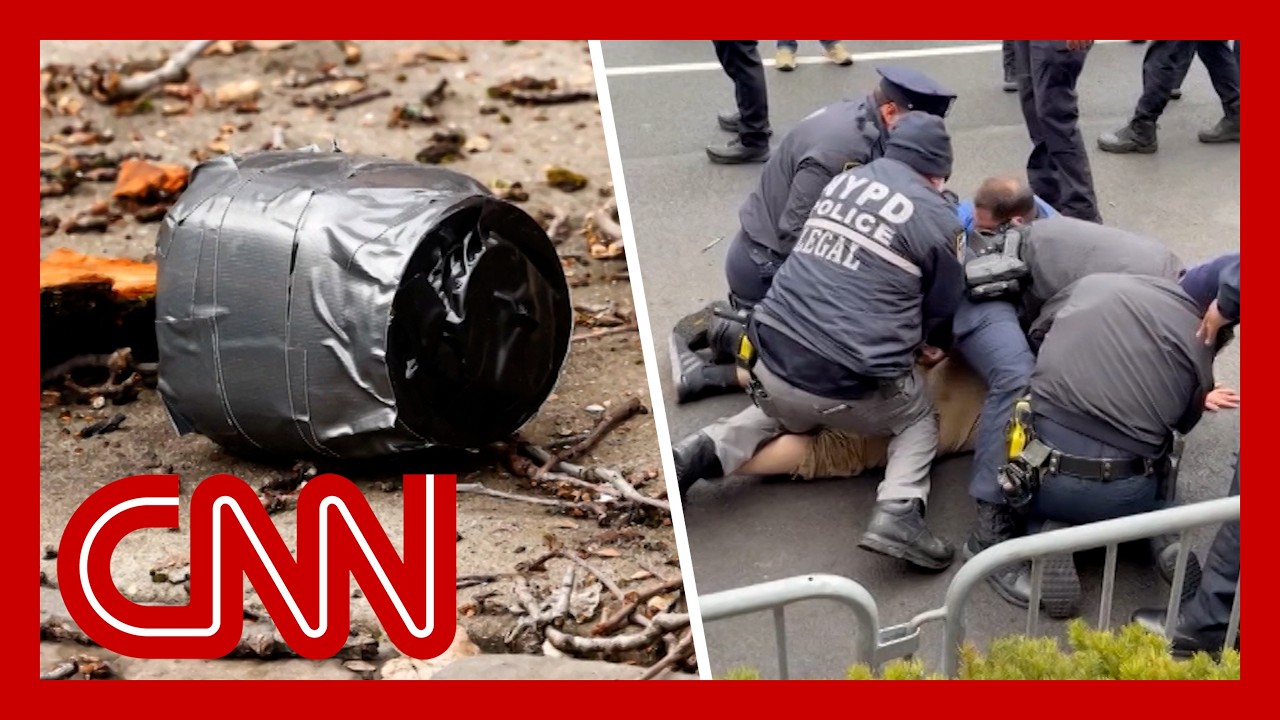
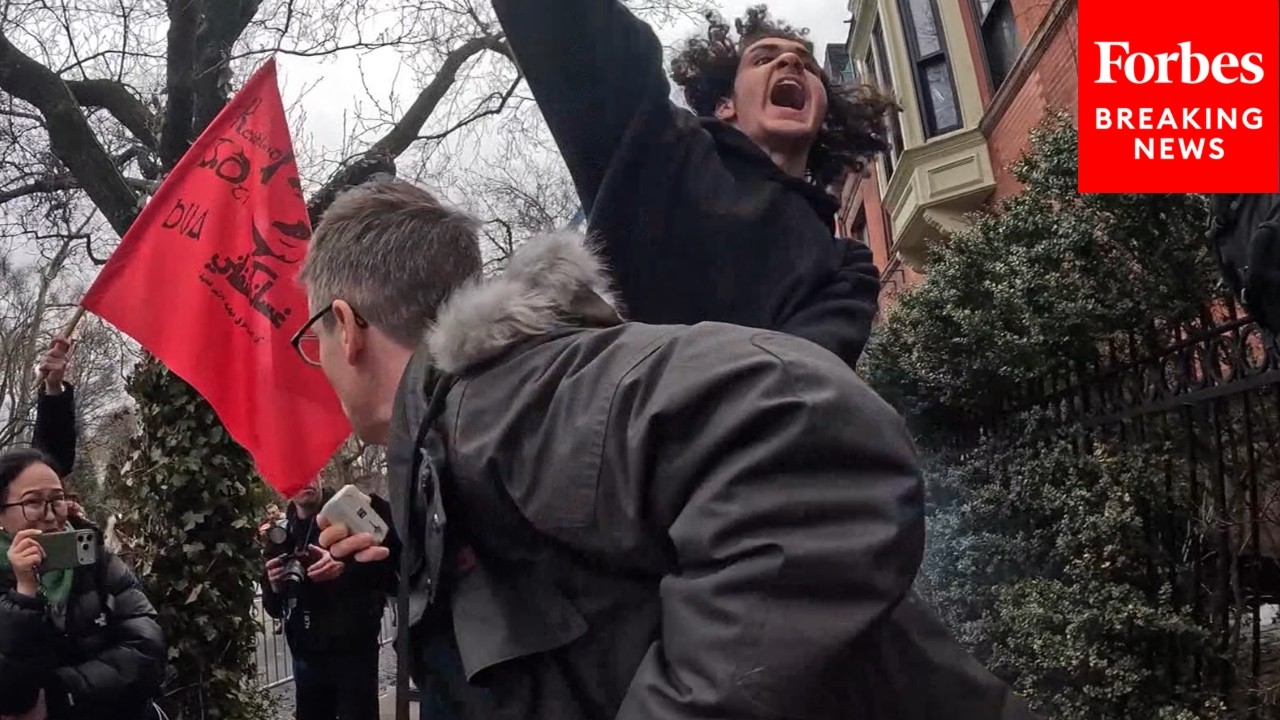
A second directive, Executive Order 61, goes beyond financial policy and addresses an increasingly urgent source of tension in New York: demonstrations targeting synagogues and religious institutions. The order tasks the NYPD with tightening protest regulations near houses of worship, developing revised guidelines for establishing “safety perimeters” to prevent harassment, intimidation, or direct obstruction of entry. The move follows an incident covered by The New York Post, in which hundreds of anti-Israel activists descended on Park East Synagogue on the Upper East Side on November 19th chanting “globalize the intifada,” “death to the IDF,” and other incendiary slogans as congregants attempted to enter the building for an event hosted by Nefesh B’Nefesh.
“New York City has always been this nation’s melting pot,” Adams said. “But too often, over the last few years, we’ve seen those of Jewish ancestry be singled out and targeted. Today, we are ensuring our city government doesn’t participate in such behavior and are putting in safeguards that protect New Yorkers’ tax dollars and their right to practice their religion without harassment.”
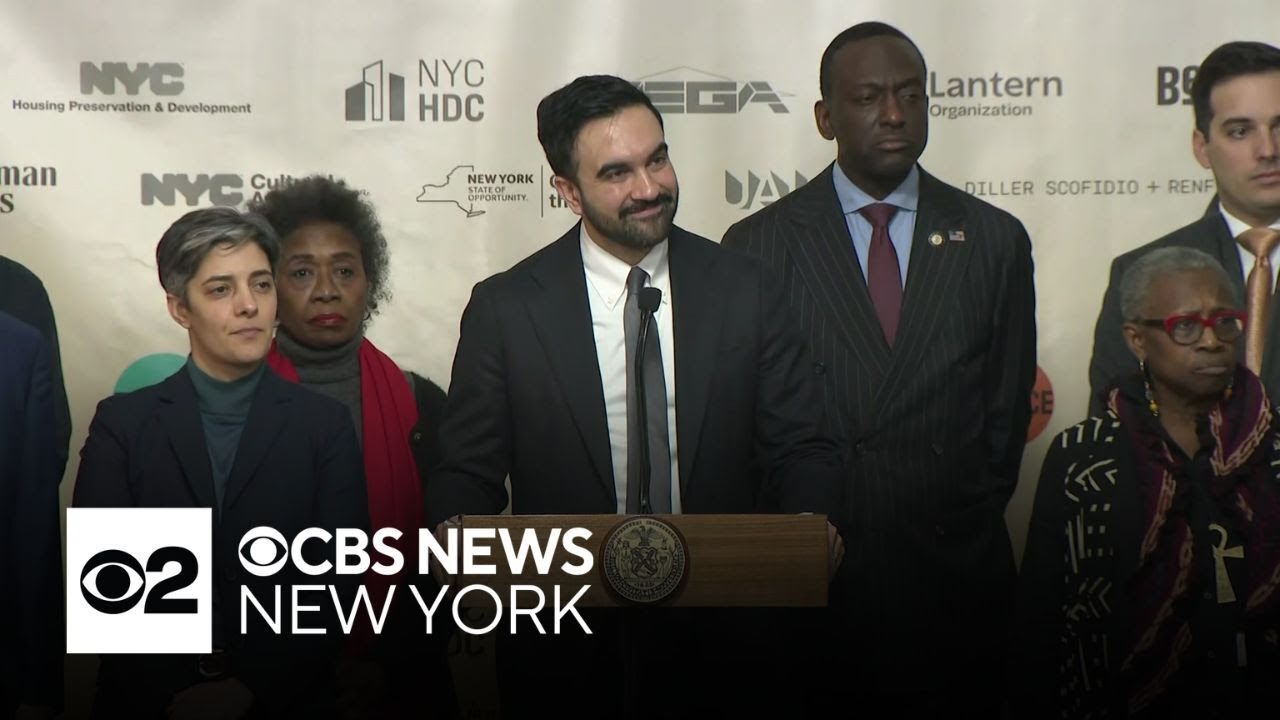
The New York Post report emphasized the timing: the orders were issued only weeks before Mamdani, one of BDS’s most prominent champions in American politics, is set to assume office on January 1, 2026. While Adams did not name Mamdani or explicitly politicize the directive, the subtext is impossible to ignore. By enacting the measures now, Adams effectively places the incoming mayor in a politically fraught position. He must either uphold an order explicitly aimed at curbing BDS—the very movement he defends—or rescind it, an act that would likely generate national backlash amid rising antisemitism and widespread concern for Jewish safety.
Executive Order 60 applies to the city’s vast procurement apparatus and its five massive pension systems, which collectively invest nearly $300 billion across global markets. Of that, more than $300 million is invested in Israeli assets—an amount The New York Post report noted as emblematic of the deep economic ties between the city and Israel.
The order instructs the chief pension administrator and all mayoral trustees to “oppose divestment from bonds and other assets made for the purpose of discriminating against the State of Israel or individuals or entities associated with Israel.” Legally, the directive affirms existing state and federal prohibitions against discrimination on the basis of national origin. Politically, it signals the outgoing administration’s intention to safeguard New York’s longstanding strategic and cultural partnership with Israel—even as the incoming administration champions a movement that expressly seeks financial, cultural, and diplomatic severance.
Outgoing Comptroller Brad Lander complicates this landscape. Lander—an outspoken critic of many Israeli government policies—has already led efforts to divest city pension holdings from Israel government bonds. While the funds retain investments in Israeli companies, Lander’s policy posture aligns more closely with Mamdani’s ideological position than with Adams’s. Executive Order 60 thus also serves as a challenge to the comptroller’s office, effectively reinforcing the mayor’s authority in matters that intersect economic policy, discrimination law, and foreign relations.
Adams framed the decision as a reaffirmation of municipal priorities, not an intrusion into political opinion. “Our investments and contracts should be made on the basis of what is best for New York City and our economic future,” he said, “and not in pursuit of discriminatory policies on the basis of politics and national origin.”
The concerns outlined by Mayor Adams are not abstract. According to the information provided in The New York Post report, antisemitic incidents in New York have surged dramatically since Hamas’s October 7, 2023 massacre, paralleling an explosion of anti-Israel activism that frequently bleeds into overt hostility toward Jews. Jewish students on college campuses report feeling unsafe; synagogues and Jewish institutions have been besieged by angry protests; and violent threats have become alarmingly common.
Executive Order 61 responds to this crisis directly, addressing what Adams described as “the unacceptable harassment of worshippers” and the growing phenomenon of demonstrations staged not against institutions of government, but against Jewish religious life itself. While protest is constitutionally protected, Adams argues that when demonstrations cross from expression into intimidation, regulation becomes not only permissible but necessary.
The NYPD is now directed to reassess how protests near houses of worship are managed, including establishing fixed distances between demonstrators and building entrances, improving barrier usage, and deploying additional safety personnel when chanting, signage, or crowd behavior indicates a credible risk of harassment. Religious leaders have welcomed the initiative, with several telling The New York Post that Jewish New Yorkers “have been waiting far too long for the city to take the threats seriously.”
For Mamdani, a staunch anti-Zionist whose rhetoric has alienated large segments of the Jewish community, Adams’s executive orders present a complex dilemma. If he rescinds them, he risks cementing the perception that he is insufficiently concerned with Jewish safety and too ideologically rigid to acknowledge antisemitism when it emanates from anti-Israel activism. If he allows them to stand, he risks angering the progressive activists who powered his election and who view BDS not as discriminatory but as a moral imperative.
The tension is especially acute because BDS does not merely criticize Israeli government policies; it rejects the legitimacy of the Jewish state’s existence. The movement’s founders have been explicit that their aim is not reform but dismantlement. Mayor Adams’s order—like Cuomo’s before it—reflects a consensus among mainstream Jewish organizations that BDS’s tactics and objectives are fundamentally antisemitic.
Mamdani, by contrast, has repeatedly declined to condemn slogans widely understood as calls for violence against Jews, including “globalize the intifada.” His statement following the Park East Synagogue protest, in which he “discouraged” the protesters’ language but condemned the synagogue for supposedly using “sacred spaces” to “promote activities in violation of international law,” was met with outrage among Jewish leaders. His framing, they argued, implicitly justified the protesters’ aggression while casting suspicion on the Jewish institution that had been targeted.
Mayor Adams’s new orders now force Mamdani to take a definitive stance on whether the city will tolerate or confront the overlap between anti-Israel activism and antisemitism.
Adams has spent the final months of his tenure reinforcing New York’s diplomatic and cultural ties with Israel. In November, as reported by The New York Post, he launched the New York City–Israel Economic Council, a public-private initiative designed to expand technological, financial, and academic collaboration. In June, he signed an order adopting the International Holocaust Remembrance Alliance (IHRA) definition of antisemitism—a framework widely endorsed across Europe and North America but fiercely opposed by anti-Israel activists because it explicitly identifies certain forms of anti-Zionist rhetoric as antisemitic.
With these measures—and now with Executive Orders 60 and 61—Mayor Adams has effectively locked his legacy into New York’s pro-Israel civic infrastructure. The question now is whether Mamdani will dismantle that architecture, preserve it, or seek to reinterpret it through the lens of his ideological commitments.
What is clear is that this confrontation will not wait long. The legal, political, and moral tensions embedded in Adams’s executive orders guarantee that the transition of power in 2026 will test not only Mamdani’s leadership, but the city’s capacity to protect one of its most historically rooted and culturally vital communities.
For now, Adams has cast his final vote—one that insists that New York must not be a city that discriminates against the world’s only Jewish state, nor a city where Jewish worshippers must walk through gauntlets of hatred to enter their synagogues. What Mamdani does next will define the political and communal climate of the nation’s largest Jewish metropolis for years to come.