

















Inside Brooklyn College’s ‘Woke Lab’: Mandatory Psychology Course Sparks Firestorm Over Whiteness, Privilege, & Ideological Indoctrination
By: Fern Sidman
A mandatory psychology course at Brooklyn College is igniting fierce debate over the role of ideology in higher education, as students seeking to complete the school’s psychologist program report being immersed in coursework centered on whiteness, privilege, and microaggressions—content critics describe as “deeply divisive” and emblematic of a broader transformation in academic culture.
According to detailed report on Tuesday by The New York Post, the course, titled Multicultural Counseling and Consultation, is required for psychology students and is framed by the college as essential training for future mental health professionals. Yet materials reviewed by educational watchdogs and obtained by The New York Post suggest that the class goes far beyond cultural sensitivity, instead promoting a rigid ideological framework that some argue substitutes political doctrine for empirical psychological training.
Unlike electives that students may opt into—or avoid—the Brooklyn College course is compulsory for those pursuing credentials in psychology. That reality has amplified concerns among critics, who say students have no choice but to engage with material that assigns moral weight and social meaning based on race, gender, and sexual identity.
The New York Post reported that the curriculum includes what it calls “collective racial healing activities,” “trauma-informed interventions,” and lessons designed to combat perceived injustice. While such language may sound benign on the surface, critics argue that the underlying content pushes students toward predetermined conclusions about society, power, and identity.
Defending Education, a conservative education watchdog, compiled extensive material from the course and shared its findings with The New York Post. The organization contends that the class functions less as professional preparation and more as ideological conditioning.
Among the most controversial components of the course is a module titled “Weaponizing Whiteness,” which features video commentary from former NFL linebacker Emmanuel Acho. In one segment cited by The New York Post, Acho tells viewers, “I firmly believe that if the white person is your problem, the white person could be your solution.”
He goes on to describe what he calls white privilege as the ability “to weaponize your whiteness” and to live “unconsciously,” contrasting that experience with what he describes as the constant calculation required of Black Americans.
Students are instructed to watch such videos and then complete reflective exercises responding to them. Critics argue that these assignments do not invite debate or critical analysis but instead encourage students to internalize a specific ideological narrative about race and power.
The New York Post reported that students were given scenarios and asked to identify examples of microaggressions—subtle or indirect expressions of bias. In each scenario, one of the listed options was the phrase “I am not racist,” an inclusion that some students reportedly interpreted as implying that denial of racism is itself a form of aggression.
Other assignments required students to respond to questions explicitly tailored to their race, raising concerns about whether students were being evaluated differently based on immutable characteristics. For critics, such practices cross a line from education into compelled speech and differential treatment.
Perhaps the most striking—and controversial—element of the course is a required BuzzFeed-style privilege quiz. According to materials reviewed by The New York Post, students must check off traits deemed to confer privilege, including statements such as “I am white,” “I have never been raped,” and “I am heterosexual.”
Critics say the exercise reduces complex life experiences to a simplistic checklist and pressures students into publicly—or at least academically—confessing supposed moral advantages. They argue that such exercises may foster resentment and shame rather than understanding or empathy.
“It should be of major concern to the public and parents that future school psychologists are required to pass a class that promotes such deeply divisive and caustic ideologies,” Rhyen Staley, research director at Defending Education, told The New York Post.
“Additionally, no student regardless of race and age should have to endure discrimination based on immutable characteristics,” Staley continued. “This is blatant ideological indoctrination and needs to stop.”
The course also assigns readings that have long been staples of critical race theory–influenced curricula. One such text, written by Brooklyn-born activist Peggy McIntosh, describes white privilege as an “invisible knapsack” of unearned benefits.
As The New York Post report detailed, McIntosh’s essay argues that white Americans are taught not to recognize their privilege, likening racial advantage to male privilege. She writes of an “invisible package of unearned assets” that whites can rely on daily while remaining oblivious to their existence.
Critics of the course argue that such framing presents contested sociological theories as settled fact, leaving little room for dissent or alternative interpretations. They contend that students are effectively graded on their willingness to adopt these assumptions.
Another assignment, worth 10% of a student’s grade, asks students to respond to the concept of the American Dream—the idea that hard work leads to success. Students are prompted to explore how this notion has allegedly been denied to those “not defined as white” and to assess the long-term impact of that denial.
According to the information provided in The New York Post report, detractors argue that the question presumes its own conclusion, positioning skepticism of the American Dream not as one possible viewpoint but as the correct one. In their view, the assignment leaves little room for students to argue that individual agency, cultural factors, or economic policy—rather than race alone—shape outcomes.
The curriculum does not stop at race. The New York Post reported that the course also delves into what it describes as intersectional critiques of American society, examining “nativist, Eurocentric, individualist, heterosexual, patriarchal, cisgender, ableist, and sizeist” influences.
Supporters of such frameworks argue that they help future psychologists understand the diverse experiences of clients. Critics counter that the sheer breadth of grievances presented risks framing American society itself as fundamentally oppressive—a worldview they say is neither clinically neutral nor empirically grounded.
The New York Post contacted Brooklyn College for comment regarding the course’s content and criticisms. As of publication, the college had not issued a public response addressing the specific concerns raised.
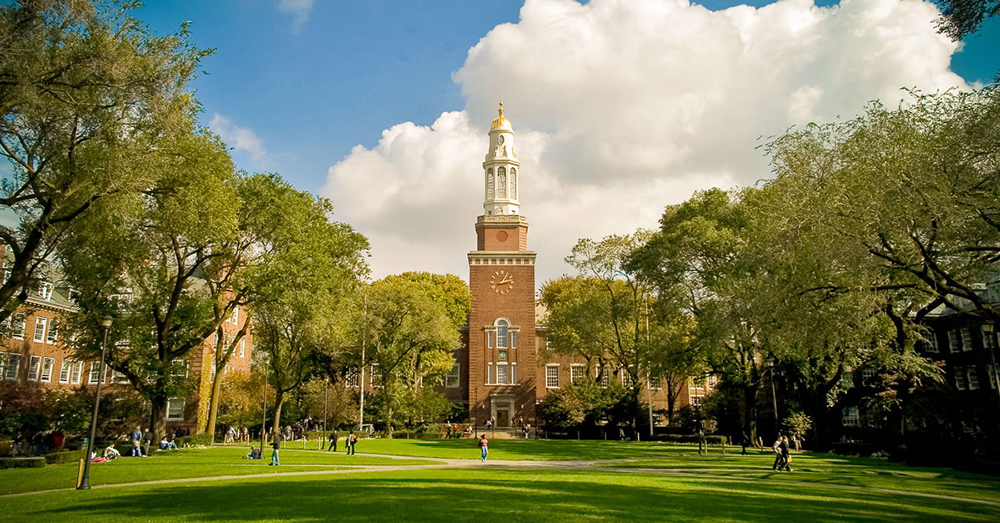
Brooklyn College is part of the City University of New York (CUNY) system, a vast public university network that serves hundreds of thousands of students. The controversy has renewed broader questions about how public institutions balance academic freedom with viewpoint neutrality—especially when courses are mandatory and funded by taxpayers.
The Brooklyn College course has become a flashpoint in a national conversation about the direction of higher education, professional training, and the boundaries between education and activism. The New York Post report framed the controversy as part of a larger trend in which ideological frameworks rooted in critical race theory increasingly shape curricula in fields far removed from politics.
For psychology students, the stakes are particularly high. As future clinicians, they will hold positions of authority over vulnerable individuals seeking mental health care. Critics argue that training rooted in rigid ideological assumptions may compromise their ability to treat clients as individuals rather than as representatives of identity categories.
At the heart of the dispute is a fundamental question: does Multicultural Counseling and Consultation equip students with tools to understand diverse populations, or does it compel them to adopt a particular worldview?
Supporters of such courses often argue that discomfort is an inevitable—and necessary—part of confronting social injustice. Critics respond that discomfort should arise from intellectual challenge, not from being sorted, judged, or graded based on race or identity.
As The New York Post continues to report, the outcome of this controversy may influence not only Brooklyn College but also how public universities nationwide design and defend mandatory curricula in professional programs.
For now, the course remains in place, its lessons unchanged. But the backlash it has provoked suggests that the debate over woke pedagogy—and its place in public higher education—is far from over.