






Columbia Pro-Hamas Agitator Once Boasted About “Killing Jews,” Trump Admin Tried to Keep Him Detained
Edited by: Fern Sidman
In a development that has sparked intense controversy and debate over national security, free speech, and antisemitism on U.S. college campuses, freed Columbia University student Mohsen Mahdawi—a prominent Palestinian activist arrested during pro-Hamas protests at the Ivy League school—was once accused of boasting about building weapons to “kill Jews” during a visit to a Vermont gun shop, according to explosive court documents reviewed by The New York Post.
The allegations, which date back to 2015, were disclosed in a federal filing submitted by the Trump administration, which sought to prevent Mahdawi’s release following his arrest for leading anti-Israel demonstrations at Columbia University. Despite those efforts, U.S. District Judge Geoffrey Crawford ordered Mahdawi’s release, rejecting the government’s attempt to detain him as a national security threat.
According to documents obtained by The New York Post, Mahdawi visited a Windsor, Vermont gun store twice during the summer of 2015. During those visits, the store’s owner became alarmed enough to notify local police, claiming Mahdawi expressed an interest in sniper rifles and automatic firearms. More disturbingly, the owner told police that Mahdawi claimed to have “built modified 9mm submachine guns to kill Jews while he was in Palestine.”
The gun shop owner also cited a separate conversation involving another gun enthusiast at a nearby firearms museum, where Mahdawi allegedly said “I like to kill Jews,” according to the government’s filing.
Mahdawi, who has been a legal permanent U.S. resident for over a decade, later acknowledged to an FBI agent that he had visited both the shop and the museum but flatly denied ever making those statements. The documents, as cited by The New York Post, indicate that the FBI agent was reportedly “satisfied” with Mahdawi’s explanation and that the matter was closed at the time.
The court filing also referenced a 2019 incident at the U.S. border, in which Mahdawi was found to be carrying drugs, according to the Trump administration. However, Mahdawi has contested the charge, asserting that the items in question were prescription medications, not illegal substances. The New York Post reported that Mahdawi was sent to a state court diversion program, and any record of the incident has since been expunged.
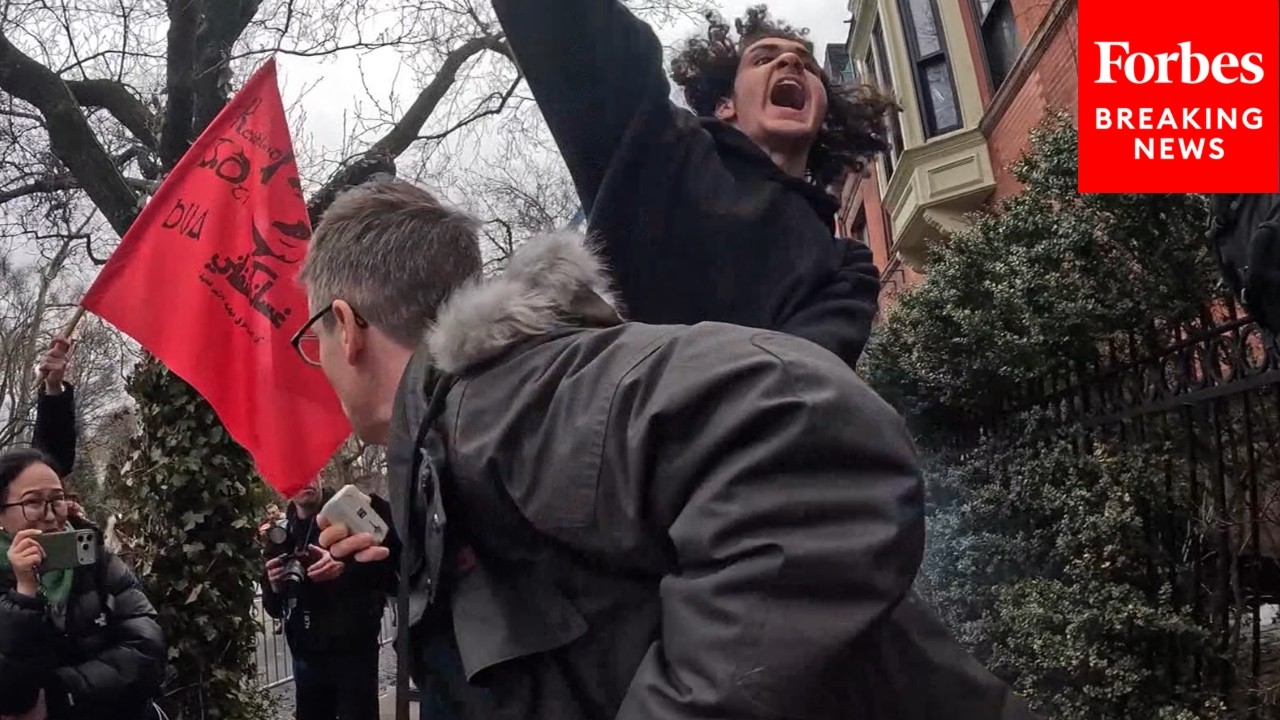
Mahdawi was taken into custody on April 14, during what was supposed to be a routine interview related to his application for U.S. citizenship. At the time, he was serving as co-president of Columbia’s Students for Justice in Palestine (SJP)—a group that has since been suspended by the university for its inflammatory campus activity during anti-Israel demonstrations.
The State Department later accused Mahdawi of engaging in “threatening rhetoric and intimidation” toward Jewish students on campus, behavior that federal authorities deemed inconsistent with U.S. values and a potential national security concern, as was reported by The New York Post.
Despite the Trump administration’s detailed case against him, Judge Geoffrey Crawford ruled against further detention, stating that Mahdawi presented a “substantial claim that the government arrested him to stifle speech with which it disagrees.”
“Even if he were a firebrand,” Crawford wrote in his decision, “his conduct is protected by the First Amendment.” The New York Post reported that the judge also noted that offending political opponents or upsetting State Department officials does not automatically render someone dangerous or detainable.
This decision was met with immediate criticism from pro-Israel groups and national security experts, many of whom cited Mahdawi’s alleged past remarks and militant activism as indicators of extremist ideology.
Immediately following his release from federal custody, a defiant Mahdawi addressed reporters outside the courthouse in Vermont, directing his remarks at President Trump and senior officials in his administration.
“I am saying it clear and loud to President Trump and his Cabinet: I am not afraid of you,” Mahdawi proclaimed, as was indicated in The New York Post report.
Mahdawi’s attorneys have claimed that his arrest was politically motivated and that he was being targeted for his pro-Hamas activism and criticism of Israel’s government. According to the report in The New York Post, Mahdawi is now scheduled to appear before an immigration judge in Louisiana via remote hearing, where the government may pursue further action related to his immigration status.
The Mahdawi case has reignited fierce debate in the U.S. over campus radicalism, antisemitism, and the boundaries of free speech, particularly in the aftermath of the October 7 Hamas massacre and the subsequent surge in anti-Israel protests on American campuses.
Federal authorities, including those under the Trump administration, argue that students who engage in rhetoric celebrating violence or targeting Jews under the guise of political protest should not be shielded from scrutiny simply because they claim to advocate for human rights.
As The New York Post report indicated, Mahdawi’s case is far from resolved—with many critics calling on federal agencies to re-examine whether individuals with alleged extremist ties should be permitted to remain in the United States or acquire citizenship.
At the intersection of free expression, immigration policy, and national security, the case of Mohsen Mahdawi stands as a flashpoint in the broader cultural battle over what America tolerates—and what it cannot afford to ignore.