






By: Fern Sidman – Jewish Voice News
The furious debate over free speech, communal safety, and the limits of public protest in New York City intensified this week as legislative efforts to restrict demonstrations outside houses of worship—particularly synagogues—gained traction in the wake of last week’s harrowing protest at Manhattan’s Park East Synagogue. The incident, which drew several hundred demonstrators and featured chants calling for violence, has galvanized Jewish leaders, alarmed lawmakers, and sparked a push for legal protections that some argue are long overdue. As VIN News reported on Tuesday, the Park East episode has become a flashpoint in a city already grappling with mounting antisemitism and volatile political tensions.
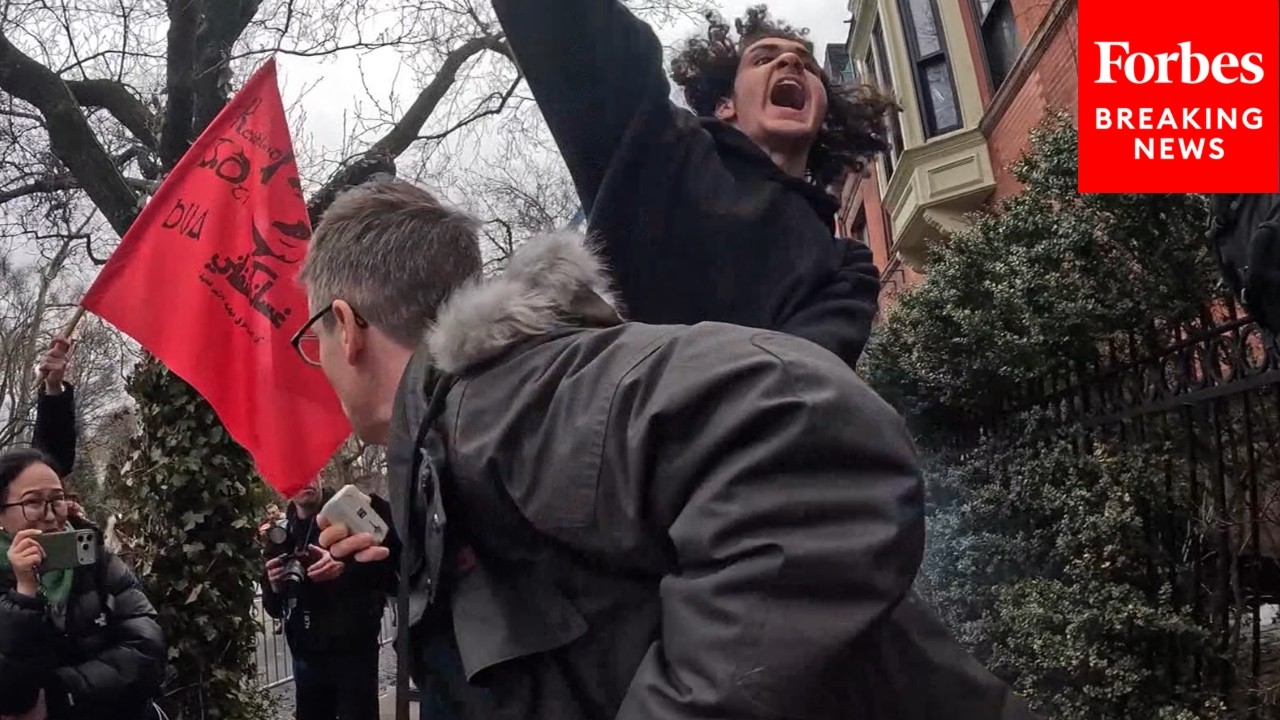
The demonstration, organized by the Palestinian Assembly for Liberation Awda of New York and New Jersey, targeted an event promoting Jewish migration to Israel and Jewish communities in Judea and Samaria. What began as a protest quickly escalated into a spectacle of incendiary rhetoric. Chants of “death to the I.D.F.” and “globalize the intifada” reverberated through the normally quiet Upper East Side block, leaving congregants shaken and prompting an outpouring of concern from Jewish institutions and elected officials alike. According to the information provided in the VIN News report, the chants were not merely provocative—they were explicitly threatening, evoking the darkest fears of a community increasingly vulnerable amid a national spike in antisemitic incidents.
For worshippers entering Park East that evening, the atmosphere was nothing short of menacing. Videos that circulated online and were later reviewed by VIN News show protesters tightly packed along the synagogue’s entrance, waving signs, jeering at attendees, and screaming slogans that many Jewish leaders have denounced as genocidal. The chant “globalize the intifada,” in particular, struck a nerve. To Jewish New Yorkers, the phrase is not an abstraction: it is a call to replicate the waves of violence, terror attacks, and suicide bombings that have taken thousands of Israeli lives.
In this context, the proximity of the protest to a synagogue—not a government building or public square—was deeply distressing. Park East Synagogue is not merely a religious institution; it is a symbol of Jewish resilience, led by Rabbi Arthur Schneier, a Holocaust survivor who witnessed the burning of his synagogue in Vienna on Kristallnacht. As the VIN News report poignantly highlighted, last week’s demonstration held an eerie resonance for Schneier and his congregants. The sight of a Jewish house of worship surrounded by hostile protesters brought memories of past hatred painfully to the surface.
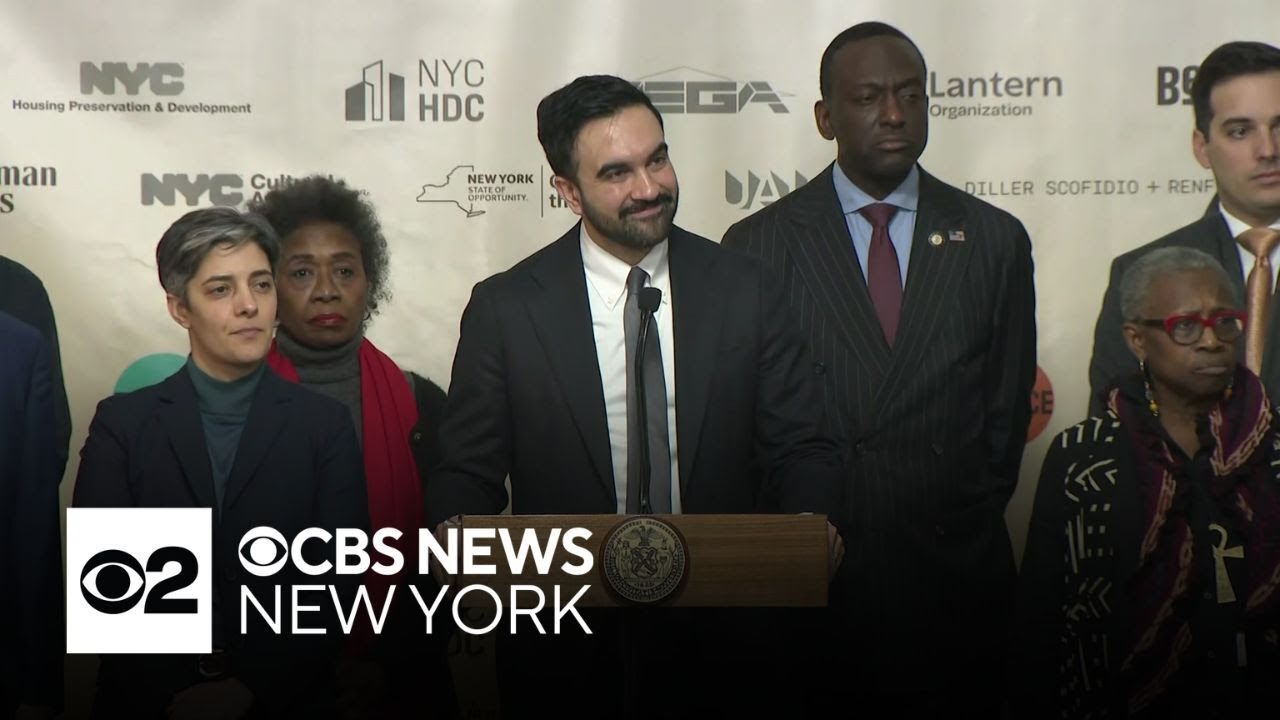
The political fallout from the protest was immediate. Mayor-elect Zohran Mamdani, himself a member of the Democratic Socialists of America, issued a public statement in which he condemned the violent language used by the demonstrators. However, he simultaneously criticized the synagogue for hosting the pro-aliyah and pro-settlement event. This dual condemnation—of both protesters and the synagogue—struck many Jewish leaders as tone-deaf at best and deeply troubling at worst.
Mamdani’s statement unsettled segments of New York’s Jewish community, who interpreted his remarks as a form of victim-blaming. Many felt that by chastising the synagogue for organizing an event the protesters disapproved of, Mamdani blurred moral lines and failed to unequivocally defend a community under siege.
It was within this context that Rabbi Marc Schneier—founder of the Hampton Synagogue and son of Rabbi Arthur Schneier—approached Mamdani and urged him to back legislation that would prohibit protests directly outside houses of worship. According to a report in The New York Times, the mayor-elect responded enthusiastically, saying he “loved the idea” and wanted to explore it further. Rabbi Arthur Schneier reportedly echoed the same plea in his own conversation with Mamdani shortly thereafter.
State Senator Liz Krueger, whose district includes the Park East Synagogue, quickly emerged as a potential legislative champion. Speaking to reporters, Krueger confirmed she was considering introducing legislation in Albany that would bar protests from taking place directly outside religious institutions. While she emphasized the need for a thoughtful approach that respects constitutional boundaries, Krueger underscored what many Jewish leaders have long argued: the right to peaceful protest does not include the right to harass, intimidate, or endanger worshippers in their own sacred spaces.
As the VIN News report noted, the proposed legislation would not aim to stifle political expression but rather to establish a protective buffer zone so that congregants can enter and exit their places of worship safely and without fear. The concept is not unprecedented. Similar buffer laws exist around schools, hospitals, and reproductive health clinics, balancing free expression with public safety.
Advocates for the synagogue buffer zone argue that houses of worship, like medical facilities, are uniquely vulnerable and serve essential social, cultural, and spiritual functions deserving of heightened protection. They point to the alarming rise in antisemitic incidents across New York City—including vandalism, assaults, disruptions of Jewish events, and harassment near schools and synagogues—as evidence of a deteriorating climate that lawmakers can no longer ignore.
The idea of legislating protective zones around synagogues has been embraced by a wide range of Jewish leaders, who view such measures as both necessary and urgent. In communications with VIN News, several rabbis and community executives emphasized that houses of worship must remain sanctuaries—not battlegrounds for political protests.
But not everyone is convinced. Civil liberties advocates caution that any such law must be carefully tailored to avoid infringing on First Amendment rights. The American Civil Liberties Union, while not commenting specifically on the Park East proposal, has historically opposed government-mandated protest restrictions, arguing that they set dangerous precedents.
Legal scholars consulted by VIN News expressed mixed views. Some note that buffer zones can be upheld by courts if they are content-neutral and narrowly crafted to promote a legitimate public interest—such as safety. Others warn that any law regulating protest locations may face challenges, especially if it is perceived as targeting a particular ideology or political movement.
One constitutional attorney told VIN News: “The key legal question will be whether the law seeks to regulate behavior—like harassment—or speech itself. The former may be permissible. The latter almost certainly is not.”
The Park East protest, while local in scope, has resonated nationally. As the VIN News report indicated, the United States is experiencing an unprecedented surge in antisemitic rhetoric and behavior, a trend accelerated by international conflicts and intensified by polarization at home. Synagogues, Jewish schools, and community centers have found themselves on the front lines of this rising hostility.
Against this broader backdrop, the Park East protest appears less an isolated incident than a harbinger. The chilling effect on Jewish worshippers—some of whom told VIN News that they were afraid to attend services the following week—illustrates the real and immediate impact such protests can have on religious freedom and communal life.
The symbolic significance of targeting a synagogue with chants advocating death and violence cannot be overstated. As one Jewish community leader put it in an interview with VIN News: “If protesters want to criticize Israeli policy, they should do so at City Hall or in Washington. Surrounding a synagogue—even one hosting a political event—is an act that crosses a moral line.”
The coming legislative debate will force New Yorkers—and their elected representatives—to confront a profound question: How does a democratic society protect its most vulnerable communities without infringing on cherished freedoms?
Jewish leaders argue that the right to worship safely is fundamental. Civil libertarians warn of the slippery slope. And political leaders, from Mamdani to Krueger, are now navigating this delicate terrain with heightened urgency.
What is clear is that the Park East incident has shifted public consciousness. It exposed vulnerabilities that many Jewish communities had feared but hoped were exaggerated. It demonstrated how easily political anger can spill into spaces meant for sanctuary. And it ignited a conversation about the responsibilities of government when minority communities feel threatened.
With momentum building for legislation to bar protests directly outside synagogues and other houses of worship, New York stands at a crossroads. The path it chooses will not only shape the security of its Jewish community but will set a precedent for balancing free expression with communal safety in an age defined by volatility and rising extremism.
As the debate unfolds, one thing is certain: The Park East protest may well be remembered as the moment when New York lawmakers—and New York’s next mayor—were forced to reckon with the consequences of allowing hatred to masquerade as protest, and intimidation to pass as free speech.
And as VIN News continues to report, the Jewish community is demanding not only words, but action.