



By: Jason Ostedder
When Nicolás Maduro was airlifted from Caracas and delivered into the custody of the United States to face federal narcotics charges, the event was more than the apprehension of a fugitive autocrat. It was a geopolitical inflection point, the kind that quietly recalibrates expectations in capitals far beyond Latin America. The operation—swift, precise, and devoid of the spectacle that once defined American military interventions—announced the return of a doctrine Washington had largely abandoned: that criminalized regimes masquerading as sovereign governments can be treated as transnational enterprises, not as untouchable heads of state.
This was not regime change by invasion or occupation. It was law enforcement on a hemispheric scale. And its reverberations are being felt not only in Caracas but in Tehran, Beirut, Moscow and Beijing—where strategists are now reassessing what it means when the United States stops negotiating with narco-states and instead acts on the indictments gathering dust in federal courtrooms.
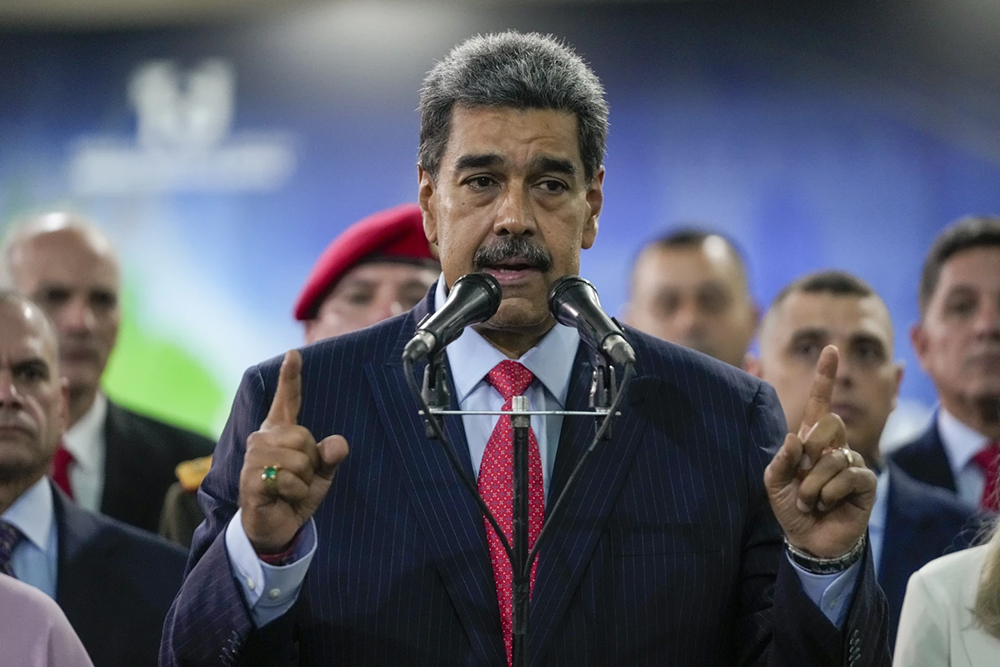
For years, American power has been measured against grinding conflicts—Ukraine’s attritional war against Russia, the prolonged instability of the Middle East, the slow choreography of sanctions and diplomatic démarches. By contrast, the Caracas seizure unfolded in hours, not years, and with no American fatalities reported. That asymmetry matters. It punctures the myth that modern warfare must always be slow, public, and indecisive.
The message is not that the United States will replicate this model everywhere. It is that, under specific legal authorities and circumstances, Washington can still act with surgical decisiveness. For regimes that have relied on opacity, geographic distance, and the diplomatic inertia of the international system, the implication is unsettling.
For two decades, the Venezuelan state has been accused by U.S. prosecutors of evolving into a logistics hub for transnational narcotics trafficking. According to indictments unsealed in 2020, Maduro and senior officials were not merely tolerating the drug trade; they were alleged to be orchestrating it—leveraging cartels as instruments of political survival while exporting cocaine that fueled addiction and violence far beyond Latin America.
The seizure of Maduro is therefore framed by U.S. officials not as retaliation but as the delayed execution of a standing warrant. That distinction is critical. It reasserts a principle lost in years of equivocation: killing citizens through proxy criminal enterprises carries consequences even when those enterprises are embedded within sovereign governments.
For much of the post–Cold War era, American strategy treated Latin America as a diplomatic afterthought—stable enough to be ignored, dangerous enough to be policed through rhetoric rather than resolve. Meanwhile, other powers moved in. China embedded itself through debt diplomacy and infrastructure projects; Russia cultivated military ties; Iran expanded covert networks through sympathetic regimes.
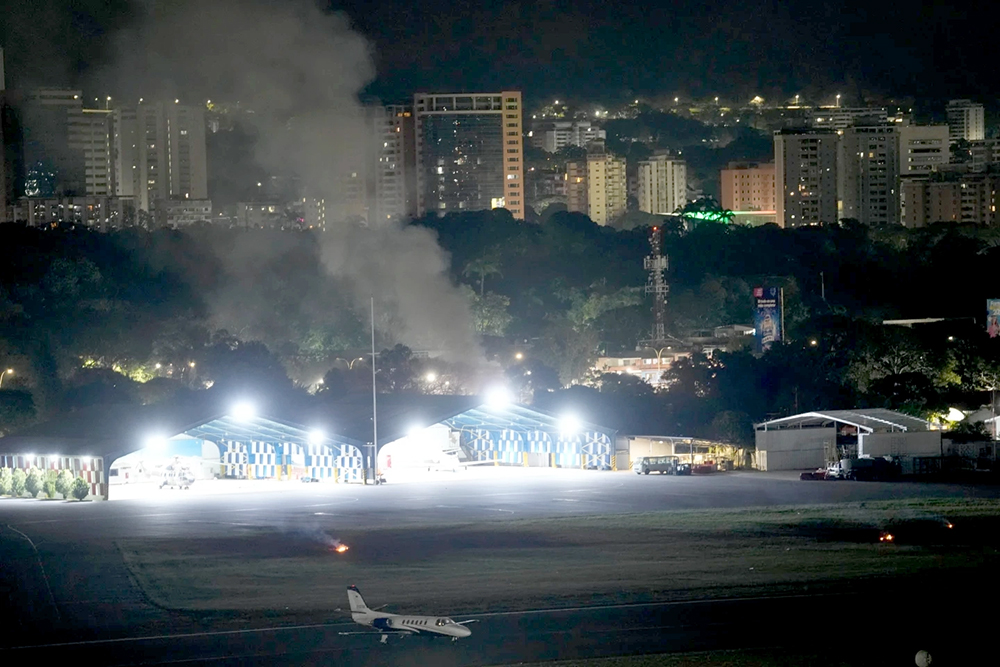
The Maduro operation signals a reversal. The Western Hemisphere is no longer peripheral. It is once again central to U.S. security doctrine, not as a backyard to be controlled but as a domain to be defended from external malign influence.
Few phrases carry the ideological freight of the Monroe Doctrine. For two centuries it has oscillated between shield and cudgel, invoked to justify everything from hemispheric solidarity to imperial overreach. Its modern reincarnation is subtler but no less consequential.
By interdicting Venezuelan oil shipments, enforcing long-ignored sanctions, and ultimately removing the regime’s apex figure, Washington has effectively announced that the era of permissiveness toward extra-hemispheric powers operating in the Americas is over. The doctrine today is less about territorial exclusion than about institutional integrity: preventing criminalized states from serving as staging grounds for foreign adversaries.
At the heart of Venezuela’s tragedy lies a paradox. The country sits atop the world’s largest proven oil reserves, yet its economy has collapsed into hyperinflation, scarcity, and mass emigration. For years, Maduro sustained himself through a shadow economy of unregistered tankers and illicit exports, particularly to China, generating hundreds of millions of dollars each month beyond the reach of sanctions.
When those revenues were finally interdicted—through vessel seizures and financial enforcement—the regime’s liquidity evaporated. This financial asphyxiation, not battlefield confrontation, set the stage for the final operation. It demonstrates how power today is exercised not only through force but through choke points in trade, insurance, technology, and finance.
The ghosts of Iraq and Afghanistan still haunt any discussion of intervention. The failures of the early 2000s—ambitious nation-building followed by chaotic withdrawal—produced a bipartisan allergy to decisive action. Yet the Venezuelan case is neither Iraq nor Libya.
Before Hugo Chávez dismantled its institutions, Venezuela possessed a functioning democracy, independent courts, and a free press. The current U.S. posture does not envision indefinite occupation or ideological reconstruction. It envisions a temporary custodial role, with governance transferred back to Venezuelans under international supervision. Whether this will succeed remains to be seen, but the design reflects hard-earned lessons from earlier debacles.
The strategic significance of Venezuelan energy extends far beyond the Caribbean. Expanded production by Western firms would not only stabilize the country’s economy but also increase global supply, exerting downward pressure on prices. That, in turn, constricts the revenue streams of petro-states whose budgets depend on scarcity—Russia and Iran chief among them.
In a world where energy underwrites both industrial capacity and military ambition, Venezuela’s rehabilitation is not merely a humanitarian project; it is an economic lever with global implications.
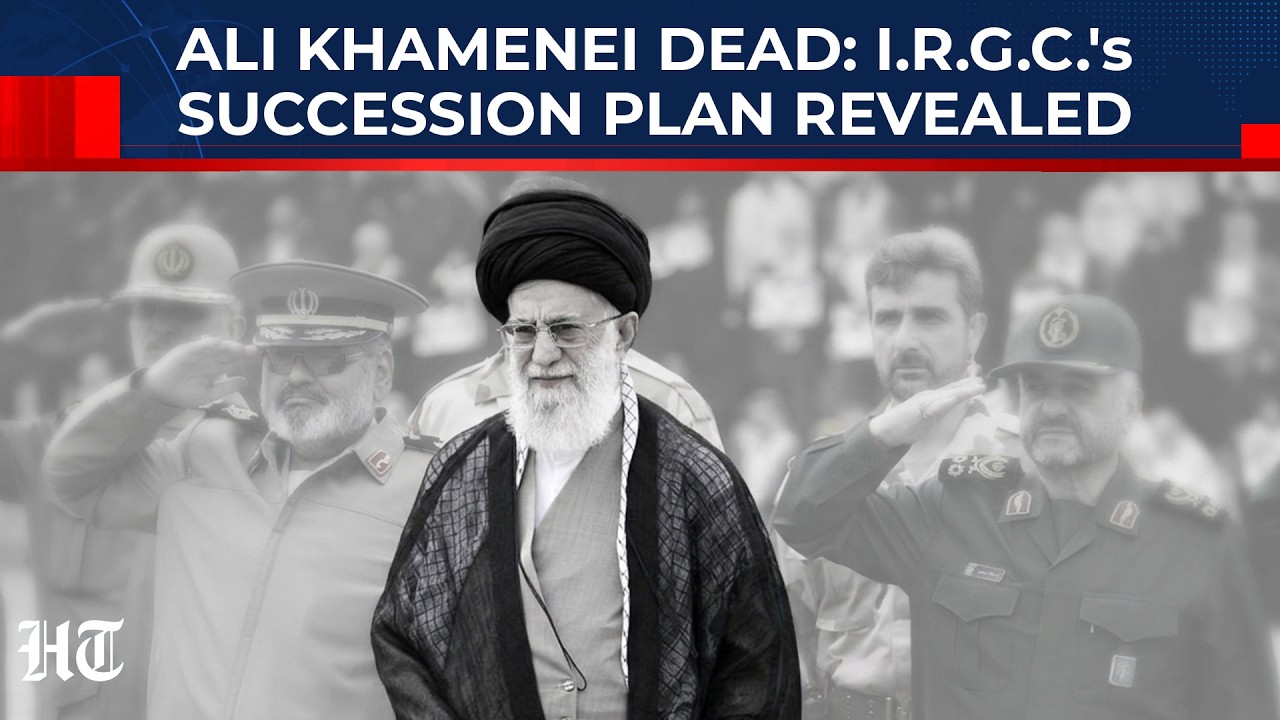
Perhaps the most profound impact of the Maduro seizure is psychological. Iranian leaders, already grappling with domestic unrest and international scrutiny, reportedly interpreted the Caracas operation as a warning shot. The lesson is not that the United States is poised to storm every capital, but that the era of impunity for criminalized regimes is ending.
Iran’s Revolutionary Guard Corps and its network of proxies—most notably Hezbollah—have long exploited weak states to expand their reach. Venezuela has been a particularly fertile node. U.S. indictments and independent analyses have alleged that Hezbollah operatives used the country’s porous borders and corrupt institutions to launder money, traffic arms, and facilitate narcotics routes in collaboration with Venezuelan officials.
This convergence of terrorism and organized crime is not incidental; it is structural. Hezbollah’s activities in Latin America are not primarily about spectacular attacks but about embedding itself within illicit financial architectures—turning drugs into dollars, dollars into influence, and influence into strategic depth for Tehran.
If Washington can dismantle the Venezuelan hub, it constricts a major artery of that network. The signal to Iran is unmistakable: the hemisphere is no longer a permissive environment for proxy empires.
The final act of this drama will unfold not on a battlefield but in a Manhattan courtroom. There, prosecutors will lay out evidence accumulated over years—linking senior officials to cartels, tracing money flows through shell companies, and exposing how a sovereign state was repurposed into a criminal consortium.
This transparency matters. Autocrats thrive on mystique. Public trials erode it. As cameras capture testimony and documents are entered into the record, the mythology of revolutionary leadership will be replaced by the banality of ledgers and wiretaps.
For much of the past decade, American power has been narrated as waning—stymied in Afghanistan, divided at home, eclipsed by rising rivals. The Caracas operation complicates that narrative. It suggests not a return to hubris, but a recalibration: targeted, legally grounded, and strategically integrated.
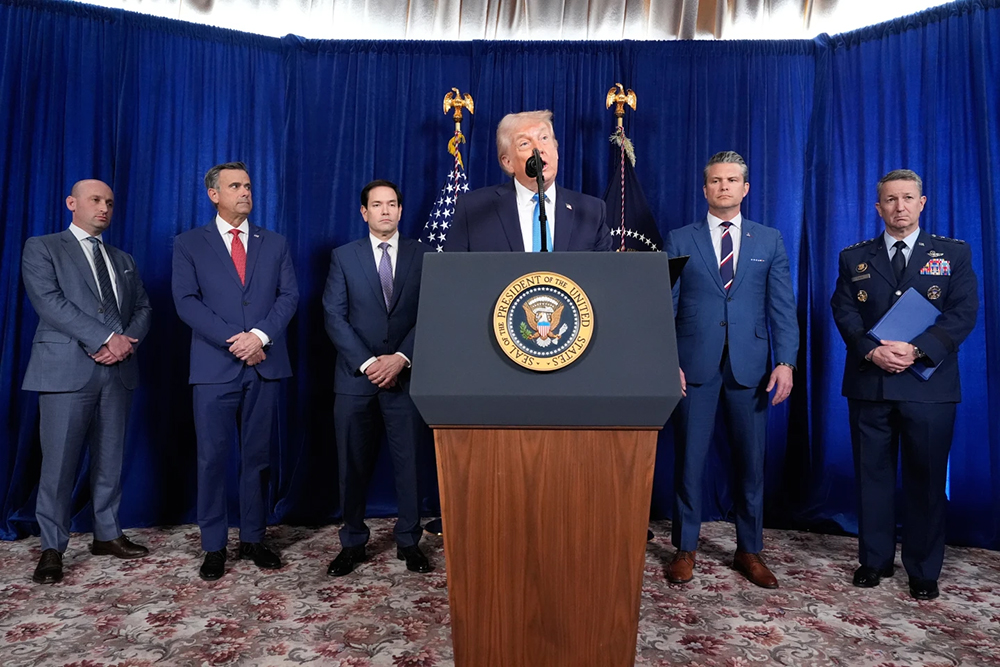
It is important to remember that the United States acted pursuant to a standing federal indictment from the Southern District of New York — an indictment that has gathered dust for half a decade while Maduro continued to rule Venezuela as a narco-kleptocrat. President Donald Trump, in authorizing the seizure, did not invent a new doctrine; he revived one that Washington has used before when criminal regimes become operational cartels.
The most obvious precedent is Manuel Noriega. On December 20, 1989 — now 37 years ago — U.S. forces entered Panama, captured its dictator, and transported him to Miami to face federal narcotics charges. Noriega was not tried as a deposed head of state. He was tried as a trafficker. He was convicted and sentenced to forty years in prison.
Maduro, it turns out, is Noriega on a far grander scale.
The 2020 superseding indictment filed in Manhattan is among the most damning documents ever leveled against a sitting foreign leader. It accuses Maduro not of corruption in the abstract, but of running what prosecutors called the “Cartel of the Suns” — a narcotics-trafficking organization embedded in the highest echelons of the Venezuelan state.
According to the Justice Department, Maduro did not merely tolerate drug trafficking; he helped design and manage it. The indictment details how he negotiated multi-ton cocaine shipments with the Revolutionary Armed Forces of Colombia (FARC), a designated foreign terrorist organization, directed Venezuelan military officials to provide the FARC with military-grade weapons, coordinated with trafficking networks in Honduras and across Central America to facilitate cocaine routes to the United States and solicited FARC assistance to train unsanctioned militia units that functioned as armed wings of the cartel.
This was not the behavior of a misgoverning socialist idealist. It was the conduct of a cartel boss wearing a presidential sash.
And Maduro was not alone. The indictment names Diosdado Cabello Rondón, Hugo “El Pollo” Carvajal, Clíver Alcalá Cordones, and senior FARC commanders Iván Márquez and Jesús Santrich — a transnational criminal syndicate whose power derived not from ideology but from tonnage.
Whether this moment inaugurates a sustained doctrine or remains an anomaly will depend on what follows. Yet for now, one reality is unavoidable. A man who once styled himself the inheritor of Bolívar has been reduced to a defendant awaiting trial, and the regimes that once watched from afar are recalculating their own vulnerabilities.
Tehran, Moscow, and Beijing are listening—not to speeches, but to the sound of a helicopter lifting off from a palace that, until recently, seemed beyond the reach of law.